Functional Testing Services to Validate Business-Critical Apps
Get high-quality functional testing services. We guarantee that your app features work as expected and according to defined requirements.

Our Functional Testing Services Offering
Whether you’re launching a web application, deploying a mobile app, or scaling an API backend, our functional testing services help catch bugs early, reduce failure risks, and ensure user satisfaction.
We isolate and validate individual components to detect logic errors early in the SDLC. Fast feedback, fewer bugs downstream.

We test combined modules and interfaces – APIs, data flows, third-party services – to ensure smooth component interaction.

Our team verifies the complete, integrated application against functional requirements, mimicking real-world usage.

We perform high-level checks on builds to confirm core functionalities work before deeper testing begins.
Every code change is tested to ensure existing functionality remains intact – automated where possible for speed and accuracy.

We validate the product from the end-user perspective, aligning outcomes with business expectations before release.

Using formal models (e.g., state machines), we generate efficient test cases to cover complex workflows and reduce redundancy.

We prioritize testing based on business impact and failure probability –focusing resources where quality matters most.
We rigorously test edge cases and boundary inputs to catch defects in software’s logic that standard tests might miss.
Our Functional Testing Case Studies
Our QA engineers apply traditional and advanced software testing techniques, ensuring precision, coverage, and business alignment.
















Why Choose Romexsoft as Your QA Partner
When testing product functionality, we know it takes more than performance to get the job done. We act as a tech partner, diving into your business, users, and technology.

By creating reusable test scripts, our team minimizes duplication and streamlines test maintenance. These assets can be leveraged across different departments within a project to enhance collaboration and efficiency.

We provide full transparency into every test run with clear execution flows, failure reasons, screenshots, and platform-independent HTML reports. You get actionable insights, not just data. These reports help your team resolve issues faster and stay release-ready.

With our codeless toolset, non-technical stakeholders can actively participate in testing, defining test flows in plain English and validating software behavior without writing code. It accelerates test creation, and brings business and QA teams closer together.
Ready to Validate Your Product with Expert-Level Functional Testing?
Let our QA experts help you deliver software, that performs every time, on every platform.
Why Functional Testing Is Essential
Functional QA services play a critical role in delivering high-quality software throughout the SDLC by validating features, preventing costly issues, and ensuring alignment with business goals.
Our Functional Testing Process
Behind every functional test we run is a single goal: to deliver real business value. Our process is structured, collaborative, and tailored to your goals, so every step moves your product closer to a reliable, high-quality release.
This is the initial stage, where we review your functional specifications, user stories, and workflows to define what needs to be validated, and why.
Then our QA engineers create detailed manual test cases and reusable automated scripts tailored to your application’s logic.
We configure staging environments, devices, and CI/CD integration to mirror real-world usage and deployment
Manual and automated functional tests are executed across all planned scenarios, covering positive, negative, and edge cases to ensure full coverage.
Bugs are logged, prioritized, and tracked with full context for quick resolution by the development team.
We thoroughly verify all fixes and rerun regression tests to ensure existing functionality stays intact and nothing breaks during updates or releases.
You receive a clean, validated product backed by detailed test reports, recommendations, and go-live confidence.
Tech Stack We Use




Two Proven Ways to Power Up Your Testing with Us
We offer two proven engagement models for functional testing services, adapted to your project size, pace, and in-house capabilities.
Team
Augmentation
Frequently Asked Question
How are functional and non-functional testing different?
Functional testing verifies whether a software application behaves as expected – focusing on features, business logic, and user actions like logging in or processing a payment. It answers the question: Does it work correctly?
Non-functional testing, on the other hand, evaluates how the system performs rather than what it does. It checks aspects like speed, scalability, reliability, and user experience. While not tied to specific features, non-functional testing is essential for identifying performance bottlenecks and ensuring your software remains usable under real-world conditions.
What business risks can functional testing help uncover before release?
That testing can uncover business risks that directly affect users, operations, revenue, and release stability. It helps identify broken customer journeys, failed transactions, incorrect business logic, integration issues, permission errors, data handling problems, and defects in critical workflows. Finding these issues before release reduces the chance of customer complaints, revenue loss, operational delays, and costly post-launch fixes.
What’s the difference between manual and automated functional QA?
Manual functional testing involves real testers executing scenarios to verify that the software behaves as intended, especially in complex or exploratory use cases. Automated functional testing uses tools like Selenium or JUnit to run scripted tests for core functionality, ideal for regression checks and CI/CD pipelines. At Romexsoft, we use both manual and automated methods to deliver fast, reliable, and accurate functional validation.
Can functional testing reduce the risk of failed releases?
Yes. Functional testing reduces the risk of failed releases by verifying that key features, user flows, integrations, and business logic work as expected before production. It helps detect defects that could affect customer experience, revenue-critical operations, or internal workflows. As a result, your team gains clearer release readiness, fewer last-minute issues, and better confidence before launch.
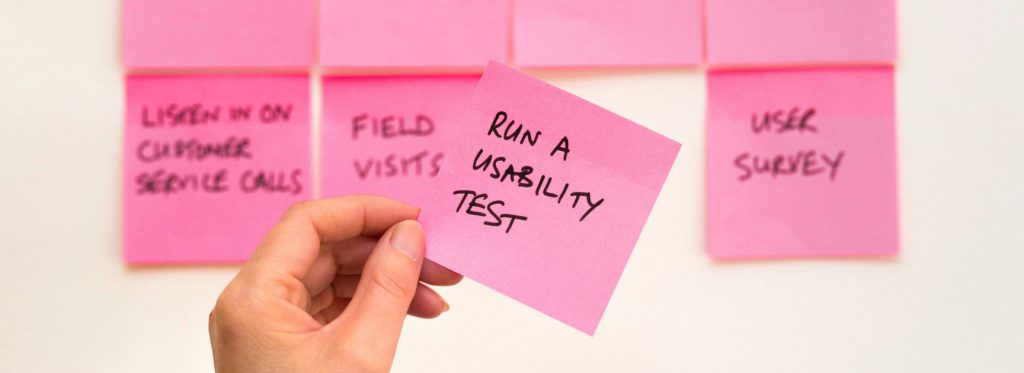

Explore the resources below to deepen your understanding of functional testing concept and see how structured QA practices can enhance the accuracy, stability, and user-ready software.